Why a Fragmented Vendor Stack Undermines Your Off-the-Plan Sales Campaign
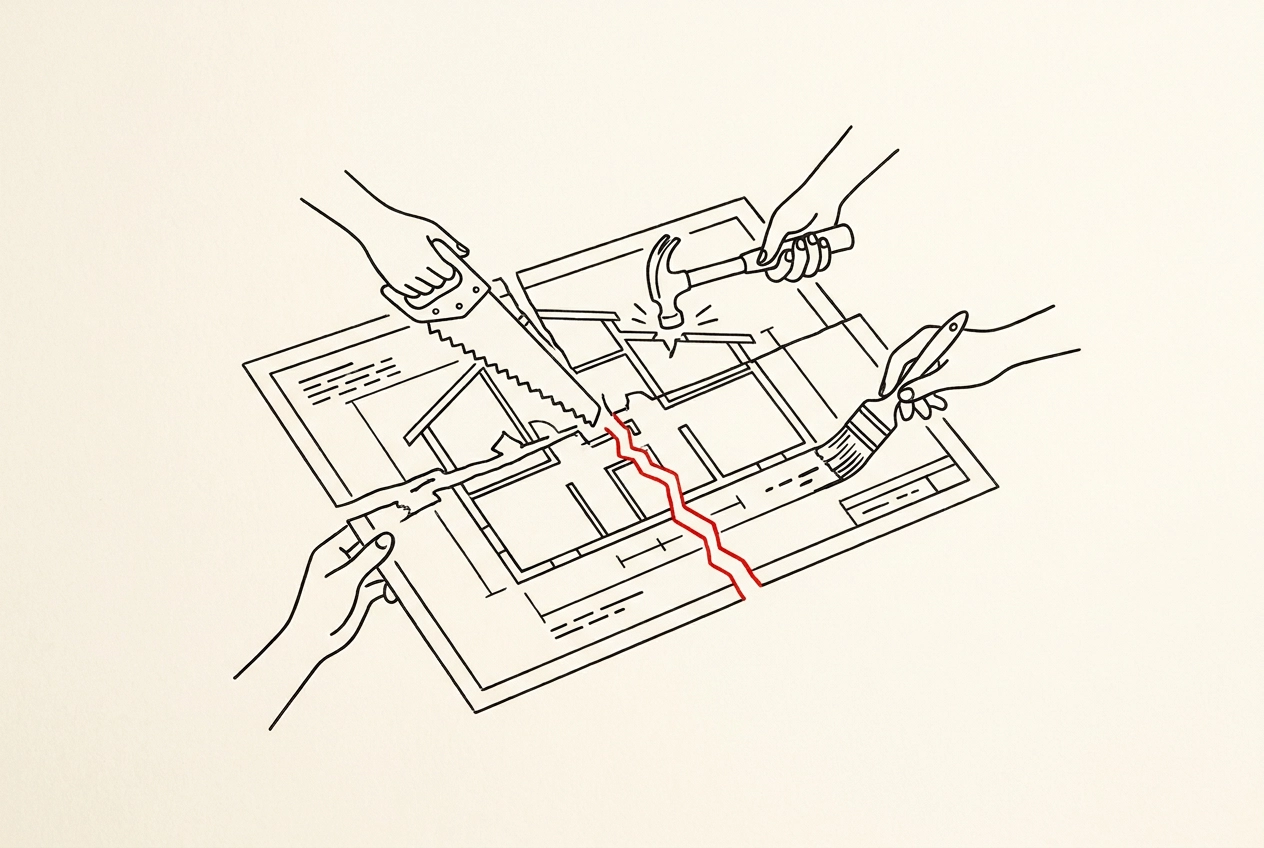
Most property developers don't set out to build a fragmented campaign. They assemble it piece by piece, adding a render studio here, a branding agency there, a separate digital team when the budget allows. The result looks functional on paper, but underneath it runs on misaligned incentives, broken handoffs, and no single owner accountable for the whole.
For off the plan apartment sales, this fragmentation is not a minor inconvenience. It is a measurable risk. Rework cycles accumulate quietly. Brand consistency erodes across touchpoints. Launch windows slip while vendors wait on each other for approvals and assets. By the time the campaign reaches buyers, the coherence required to build trust and drive pre-sales commitment has already been compromised.
This post examines how vendor fragmentation takes hold, identifies the four specific failure modes that damage campaign performance, and explains why off the plan apartment sales are uniquely exposed to these breakdowns. It then builds the case for integrated delivery, not as a premium option, but as a straightforward risk-reduction decision that protects momentum, brand integrity, and ultimately your sales results.
The Campaign Assembled From Parts
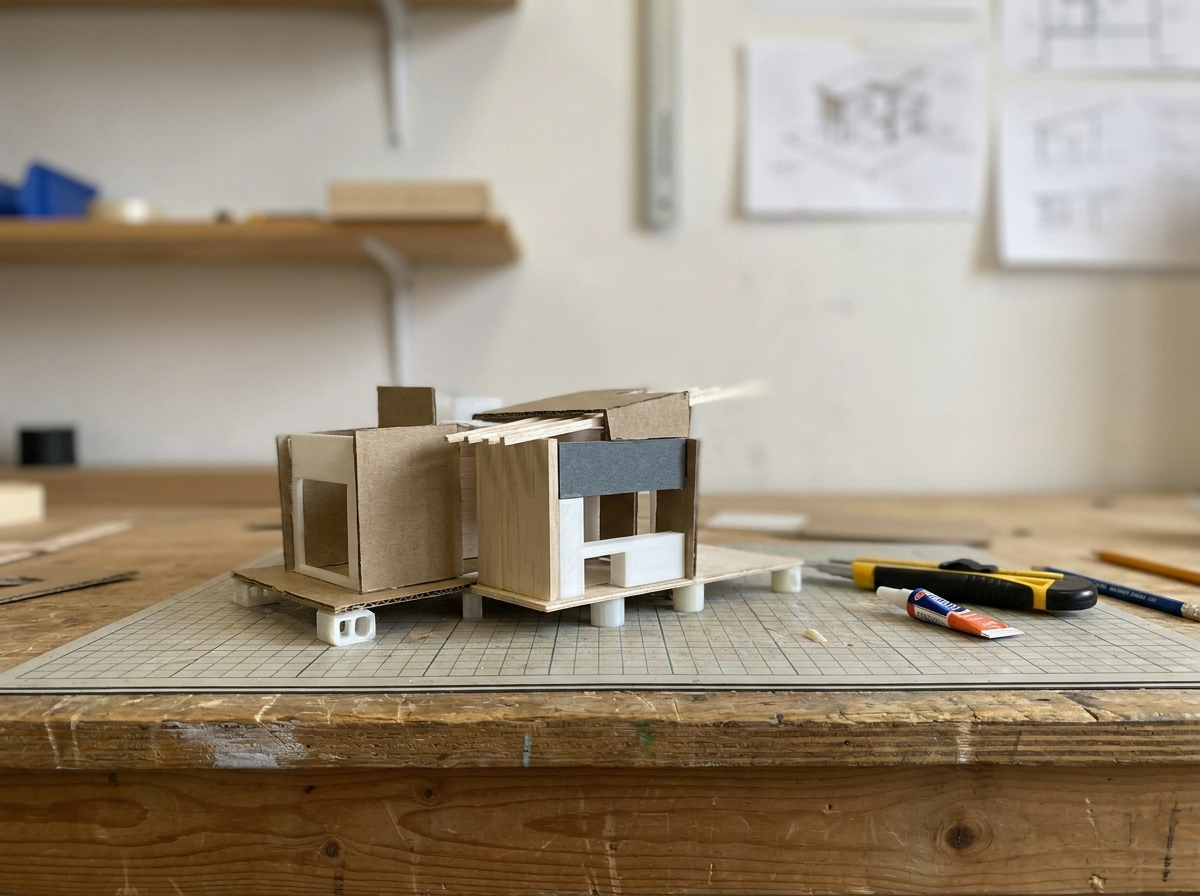
The typical off-the-plan campaign is assembled the same way every time: a render studio is engaged early, a branding agency follows, then a print house for the apartment sales brochure, a digital team for paid media, and a web developer for the project site. Each vendor is appointed separately, often at different stages, frequently with different briefs.
The individual vendors are rarely the problem. Most perform well within their own scope. The problem is structural: when everyone owns a piece, no one owns the system. Each party optimises for their own deliverable rather than the unified campaign outcome, and the gaps between workstreams are where campaigns quietly lose ground.
This fragmentation rarely announces itself. It accumulates gradually as project scope grows and specialists are layered in without a clear integration protocol. By the time a developer recognises the coordination failure, it is already costing them, in rework cycles, revision delays, and brand inconsistency across touchpoints that no single vendor invoice will ever itemise.
The consequence is felt most sharply in off-the-plan apartment sales, where buyers are committing to something that doesn't yet exist. The campaign materials are the product. A buyer's journey from first digital impression through to the display suite and contract depends entirely on those materials telling one coherent, consistent story. Fragmented delivery fractures that journey at every handoff, and confidence, once eroded, is difficult to recover.
How Vendor Fragmentation Takes Hold
As noted, fragmentation assembles quietly, a renderer whose work the project director has trusted on previous jobs, a branding consultant recommended by the architect, a print house the marketing manager has used for years. Each decision, evaluated on its own merits, is entirely defensible.
The problem is that these decisions are rarely evaluated together. Procurement happens in pockets: whoever is closest to a particular need makes the call, without a clear mandate for campaign-wide coherence. No single person at the point of vendor selection is asking how each new appointment will integrate with the others already in place.
As scope expands, the pattern compounds. A digital agency joins mid-campaign. A copywriter is brought in to service the apartment sales brochure. A separate web team handles the project site. Each vendor receives their own brief, establishes their own point of contact, and builds their own understanding of the project. Parallel workstreams form without an integration protocol to converge them.
The result is a campaign with multiple authors and no shared voice. Visual identity, messaging tone, and offer positioning are each owned by a different party, each working from a slightly different version of the story.
Failure Mode One: The Rework Cycle Tax
Once fragmentation takes hold, the first place it draws blood is your revision process.
Every change request that crosses a vendor boundary requires a fresh brief, a new round of alignment, and a separate approval chain. Adjust the brand colour palette mid-campaign and you haven't made one change; you've made four. The renderer, the print house, the digital team and the web developer each receive that update independently, interpret it through their own workflow, and reapply it without the context that informed the original decision. The result is rarely consistent, and correcting the inconsistency starts the cycle again.
Coordination meetings are the visible symptom. As the vendor count grows, so does the calendar overhead required to keep workstreams aligned. That time has a direct opportunity cost: every hour a development manager spends re-briefing external parties is an hour not spent on buyer relationships, agent engagement, or project delivery.
The downstream consequence is a delayed launch window. In off-the-plan apartment sales, this is not a neutral outcome. Pre-sales momentum is fragile and time-sensitive; once a campaign loses its opening window, rebuilding buyer urgency is genuinely difficult. Interest cools, enquiry quality drops, and the pre-sales targets that underpin construction finance become harder to reach.
The insidious quality of the rework tax is its invisibility at the invoice level. No single vendor bill captures the full cost. It accumulates quietly across the campaign as eroded time, duplicated effort, and internal resource redirected from growth to coordination management.
Failure Mode Two: Brand Drift Across Touchpoints
Rework cycles drain budget and time. Brand drift is quieter, and in some ways more damaging.
It happens without any single vendor making a mistake. Visual identity, tone of voice and offer messaging each sit inside a separate workstream, and each vendor applies their own interpretation over time. Individually, every deliverable clears the brief. Collectively, they begin to diverge.
The result is a campaign that tells different stories to the same buyer. An apartment sales brochure might carry a refined, restrained character, while the digital channels run warmer and more promotional. Neither vendor is wrong. But a buyer moving between those touchpoints is receiving two distinct impressions of the same project.
In off-the-plan apartment sales, this is particularly consequential. Buyers move repeatedly between digital advertising, printed collateral and the display suite over the course of their decision. Each crossing of a vendor boundary introduces another small inconsistency. The cumulative effect is a brand that feels vaguely unstable, even if no single piece looks obviously off.
That instability creates cognitive friction. Buyers don't typically name it, but it registers as doubt at exactly the moments when confidence should be building.
The deeper problem: a developer reviewing vendor deliverables in isolation will often see nothing wrong. The drift only becomes visible when the materials are experienced together, sequentially, as a buyer would encounter them. By then, it has already done its work.
Failure Mode Three: Launch Windows That Slip
Brand drift is damaging, but it's a slow erosion. Schedule slippage is acute, and in off-the-plan sales, the consequences land fast.
Pre-launch windows are compressed by construction finance milestones, market conditions and competitor activity. The number and quality of pre-sales contracts secured before those milestones depends directly on when the campaign goes to market, not just how well it performs once it's there. Miss the window, and the pipeline needed to satisfy a lender's presale threshold doesn't materialise on time.
In a fragmented vendor stack, no single party holds a view of the full campaign timeline. Each vendor manages their own schedule and capacity. Dependencies between workstreams are identified reactively, when they become problems, rather than mapped and managed from the outset.
The cascade effect is straightforward and brutal. CGI delivery slips two weeks. The sales brochure can't be finalised without hero renders. Digital assets are on hold pending approved imagery. The display suite fitout is waiting on print specifications. The launch date moves. Each delay is individually explicable; the compounded result is a campaign that arrives late to its own market.
Every vendor has a reasonable explanation. Capacity constraints, client revision rounds, supplier lead times: these are real production realities. But when they occur across five separate parties with no shared timeline, the developer absorbs the full cost of coordination and resolution, while each vendor remains technically on brief.
In off-the-plan sales, lost momentum is rarely recoverable within the pre-launch window.
A single underperforming vendor is recoverable. Sequential slippage across multiple workstreams, with no one responsible for the critical path, is the failure mode that quietly dismantles pre-sales campaigns.
Failure Mode Four: A Buyer Journey That Breaks Apart
Schedule slippage is costly. What it leaves behind, though, is a buyer journey that no longer holds together.

The off-the-plan buyer journey spans months, running from a social media impression or search result through a brochure, a display suite visit, and eventually a contract. Every touchpoint needs to carry the same visual language, the same emotional register, and the same story about the project. Not similar. The same.
In a fragmented campaign, that continuity is structurally impossible. Each vendor interprets the project's identity from their own brief, producing work that may be individually strong but collectively inconsistent. The buyer experiences this as a vague unease rather than a specific complaint.
The CGI-to-brochure-to-digital-to-display-suite handoff is where fractures are most pronounced. Renders produced by one studio carry a particular quality of light, a spatial warmth, a specific material character. When photography, video, or printed collateral is produced by a separate party working from a different reference point, that character shifts. The buyer who formed their first impression online arrives at the display suite to find something subtly different from what they expected. They rarely articulate why. They just leave less certain than they arrived.
The result is reduced enquiry quality and lower display-suite conversion, the two metrics that drive pre-sales outcomes.
Why Off-the-Plan Sales Are Particularly Exposed
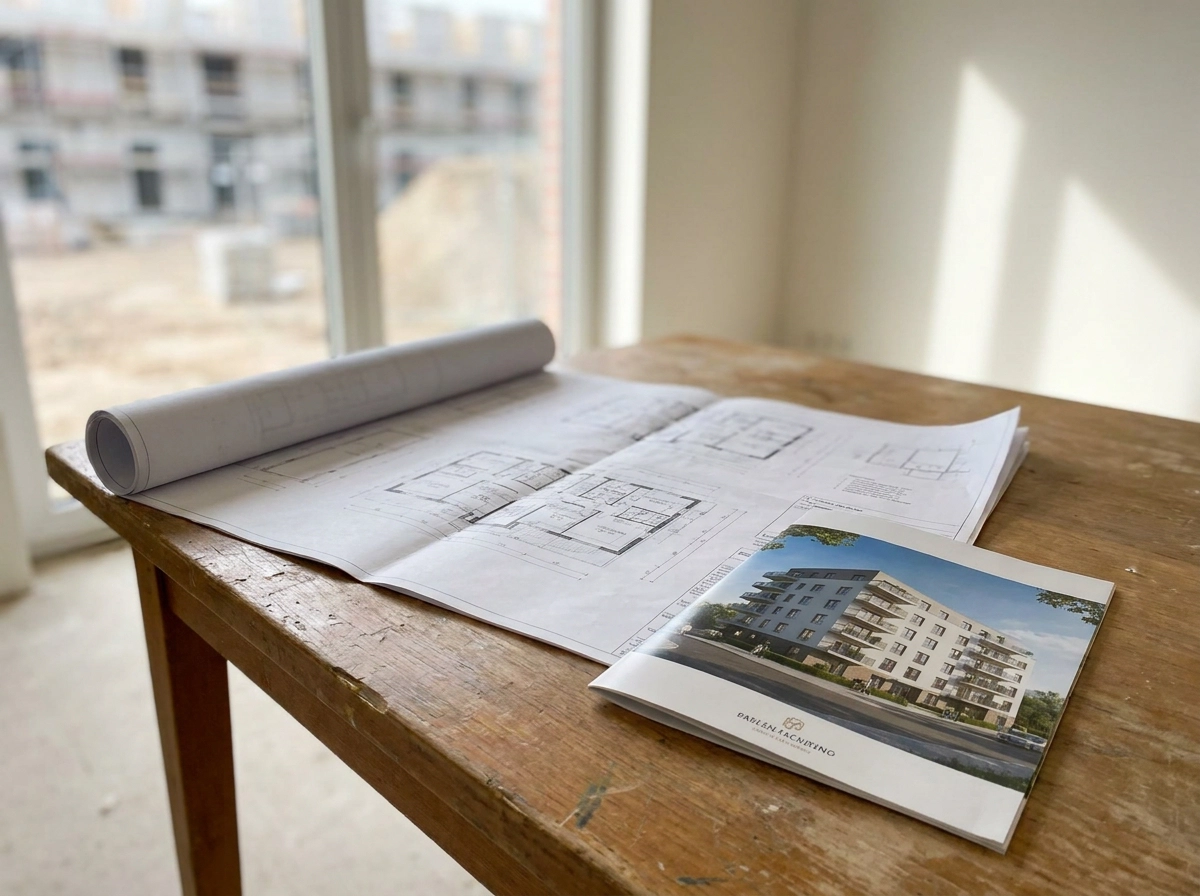
All of this makes off-the-plan apartment sales categorically different from other property campaigns. With an established building, the product does its own persuasion. Buyers walk through it, feel the ceiling height, read the light. In off-the-plan sales, campaign materials carry that entire burden. Those materials carry the full persuasion burden, their coherence signals the developer's quality.
That proxy relationship operates under time pressure most campaigns underestimate. Pre-launch windows are compressed by construction finance milestones, market conditions and competitor activity. There is no buffer for late-stage brand correction triggered by vendor misalignment.
Buyer expectations have also raised the baseline. Buyer expectations for visual quality and narrative sophistication have risen materially. Research into off-plan buyer sentiment confirms that emotional connection and confidence in the finished product are decisive, buyers are increasingly discerning about what a campaign communicates beyond the functional.
The risk asymmetry of fragmentation is what makes it so quietly damaging. The savings from assembling separate vendors are real but modest, and they arrive early. The costs, rework cycles, brand drift, schedule slippage, conversion loss, compound across the campaign life and are often only visible in retrospect, once the pre-sales window has closed.
What Integrated Delivery Actually Resolves
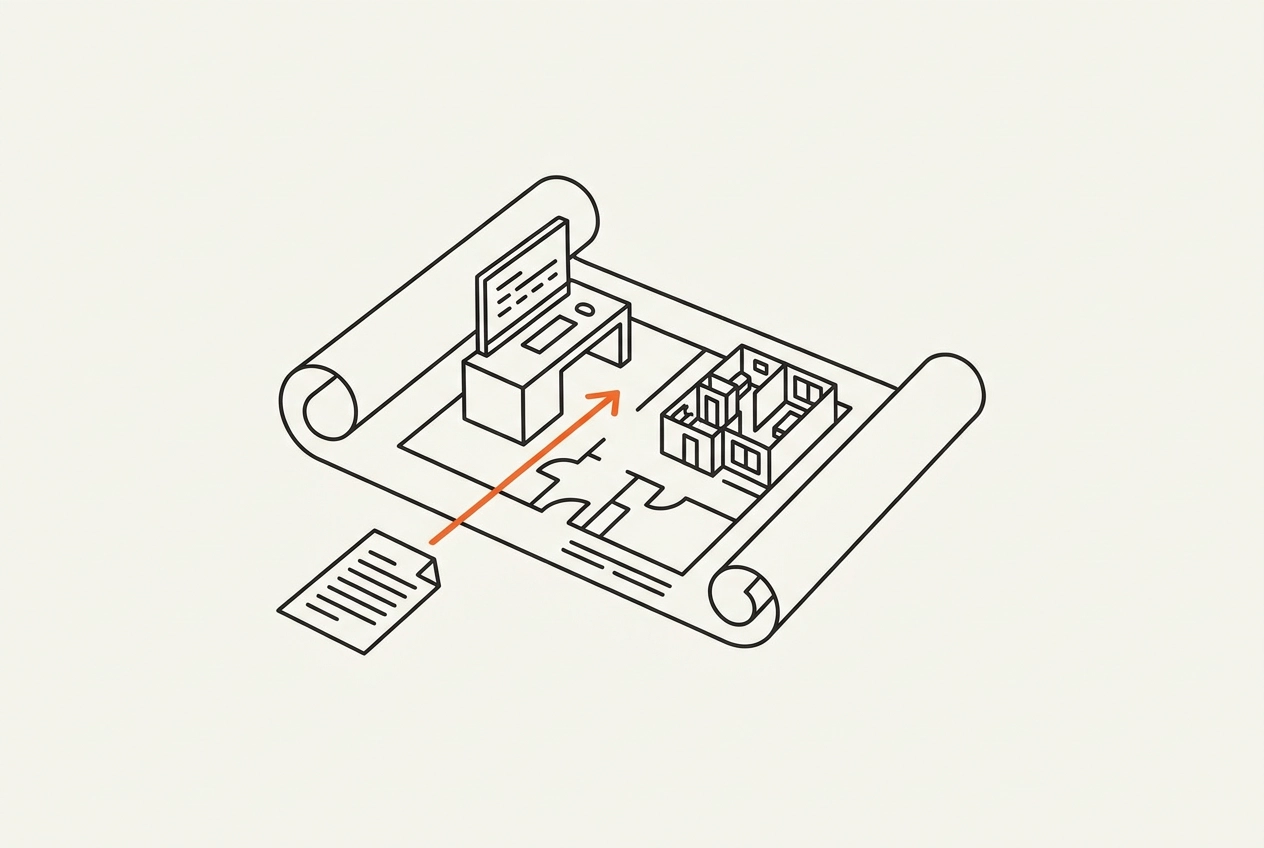
Each failure mode described above has a direct structural resolution. The integrated studio model doesn't paper over fragmentation; it removes the conditions that create it.
One brief and one creative direction eliminate re-briefing cycles, alignment meetings, and version-control drift across vendor inboxes.
Visual coherence stops being something to negotiate and becomes something built in. When the same studio produces the architectural visualisation, the apartment sales brochure, digital assets, and display suite, all handoffs are internal. Context doesn't erode between parties because there are no parties to erode between.
Timeline management follows the same logic. A studio producing the renders knows exactly when they will be ready, and can sequence print, digital, and spatial production around that reality rather than reacting to it after the fact. Dependencies become visible from the inside, where they can be planned, not discovered.
Brand integrity across the full buyer journey maintains itself. The creative direction is singular and applied holistically, without requiring the developer to police consistency across separate vendor relationships.
This is, most accurately, a risk-management decision, one studio, one vision, one campaign that holds together from CGI through to contract.
Consolidation as a Risk-Reduction Decision
That reframe matters. Integration isn't a premium service tier or a production convenience; it is a structural response to a structural problem.
Developers evaluating their campaign approach tend to ask the wrong diagnostic question. Auditing each vendor's performance in isolation will rarely surface the failure, because coherence across the full buyer journey is nobody's explicit responsibility.
The more useful question is this: does our campaign tell one consistent story across every touchpoint a buyer will encounter, from the first digital impression through to the display suite?
For off-the-plan apartment sales, that question carries commercial weight. Buyers are committing to something unbuilt, often well before completion. Every inconsistency introduces doubt at precisely the moment trust needs to be building. With a compressed pre-launch window, there is no second act to recover it.
These failure modes are structural, not executional. Individual vendor quality cannot compensate for the coordination gaps between them.
Consolidating delivery under one integrated studio removes that structural vulnerability. One creative direction, applied across every asset, from CGI to print to digital to display suite, closes the gaps where off-the-plan campaigns quietly lose ground.
Conclusion
Off-the-plan campaigns don't fail because individual vendors underperform. They fail because fragmented stacks create coordination gaps that no single party is responsible for closing. The rework cycles, brand drift, missed launch windows and broken buyer journeys documented here are structural problems, not execution problems.
The stakes are uniquely high in off-the-plan sales. Your campaign materials are the product. Every inconsistency across touchpoints erodes the trust buyers need to commit to something unbuilt.
The resolution is straightforward: consolidate delivery under one integrated studio with a single creative direction applied across every asset, from CGI through to display suite.
If your current campaign structure cannot answer "yes" to the coherence question, now is the time to address it. A finite pre-launch window waits for no vendor handoff. Protect it by ensuring one team holds the whole picture from the start.